
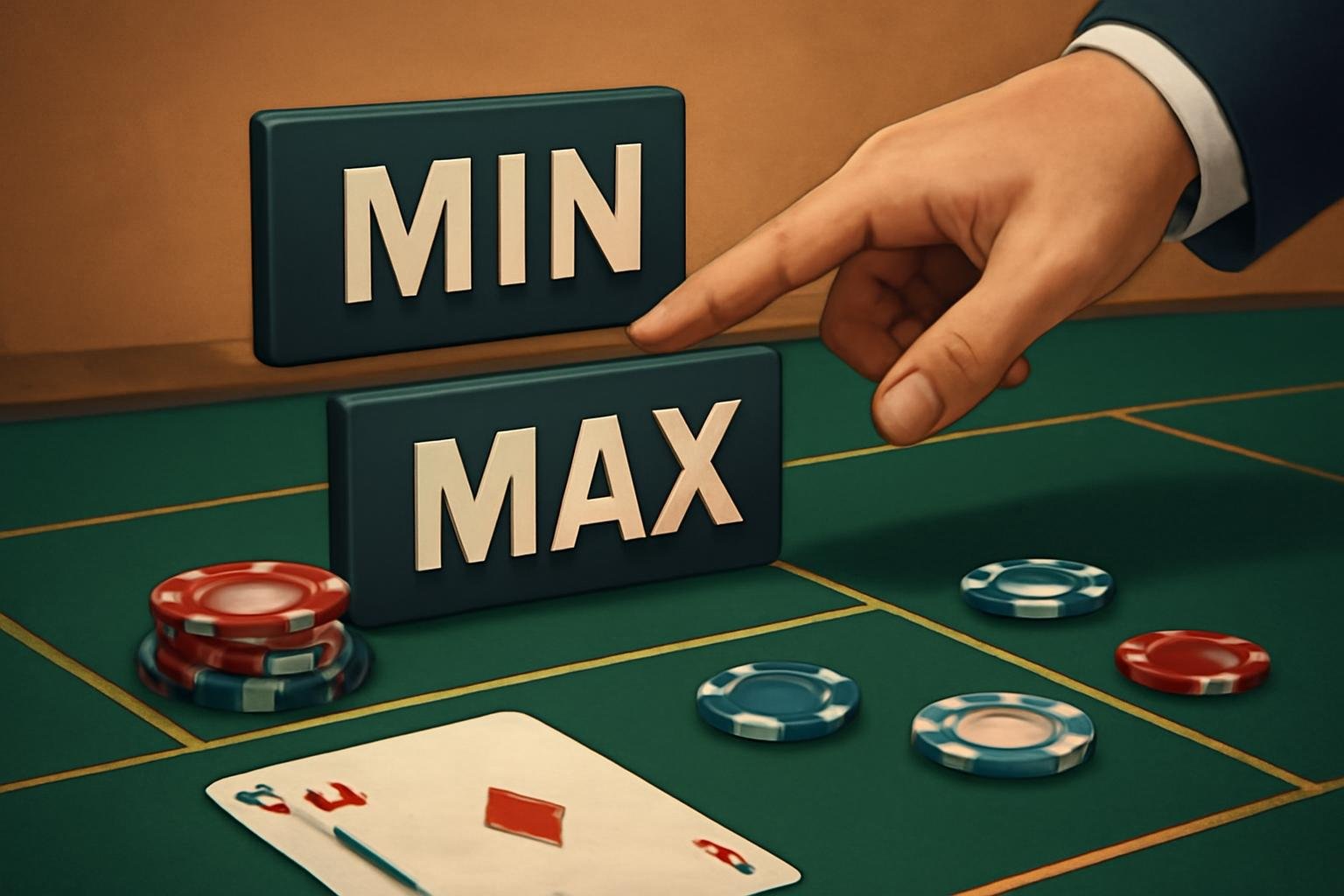
Before placing a casino table bet, check more than the minimum shown on the screen or table sign. The minimum tells you the smallest permitted wager; the maximum sets a ceiling. Bet increments, side-bet rules, and how limits apply across a round can also affect what you are allowed to stake. A quick check helps you understand the rules before money is in play.
What a table minimum and maximum mean
A table minimum is the smallest accepted wager for a particular betting area. A maximum is the largest permitted wager there. Limits can vary between games, tables, betting positions, or versions of a game, so do not assume that one number applies everywhere.
For example, a table might allow a main bet within a stated range while setting a different range for a side bet. The amount you can stake on one hand or round may also differ from the total you could wager across several separate positions. Read the limit information for each area you plan to use.
Limits describe allowed stake sizes, not your likelihood of winning. A higher maximum does not make a game more favorable, and a lower minimum does not remove the risk of losing a wager.
Check these details before joining
- Which bet the limit covers: Confirm whether the displayed range applies to a main wager, a side bet, or both.
- Bet increments: Some games accept wagers only in set steps. If a limit is shown as a range, that does not necessarily mean every amount within it is accepted.
- Per-round or per-position limits: Find out whether the maximum applies to each individual bet or to a combined wager.
- Game-specific conditions: A table’s rules may affect which bets can be made together or how payouts are handled. Review the rules before playing.
- Displayed currency and denomination: Check that you understand the currency and unit shown, particularly when using an online interface.
In a live or online roulette game, for instance, the betting layout may show different limits for different types of wagers. Roulette rules and formats can vary, so it is useful to understand the differences between roulette types before relying on assumptions from another table.
Side bets need their own review
A side bet is a separate wager offered alongside a game’s main bet. It may have its own minimum, maximum, rules, and payout schedule. A side bet’s advertised payout is not, by itself, enough to tell you how often it wins or whether it suits your preferences. Read the specific rules and paytable, and make sure you know whether the side bet is optional.
Do not assume that a side bet is included in the main wager or that its limit matches the main bet’s limit. If the interface is unclear, pause and look for the game’s help or rules section rather than guessing.
Keep table limits separate from bonus terms
A table’s betting limits are game rules. Casino bonus conditions are separate terms that may specify which games or wagers count toward a promotion, as well as other restrictions. Being within a table’s maximum does not necessarily mean a wager qualifies under bonus terms. If you are considering an offer, check its conditions independently; this guide to reading wagering requirements explains what to look for.
Use limits as a planning check, not a target
A maximum is permission to wager up to that amount, not a recommended stake. Before playing, decide what amount you are willing to spend on entertainment and how long you intend to play. Choose a table whose minimum fits that plan, and do not raise your budget to meet a limit. Gambling involves risk, and outcomes are uncertain; a basic overview of gambling can help clarify the role of risk and chance.
If the minimum feels too high, choose a different table or stop rather than stretching your budget. If you find yourself chasing losses or struggling to stick to your own limits, take a break and consider stepping away from gambling. The practical takeaway is simple: confirm the limit for each bet, understand any separate side-bet rules, and decide your spending boundary before you start.

