
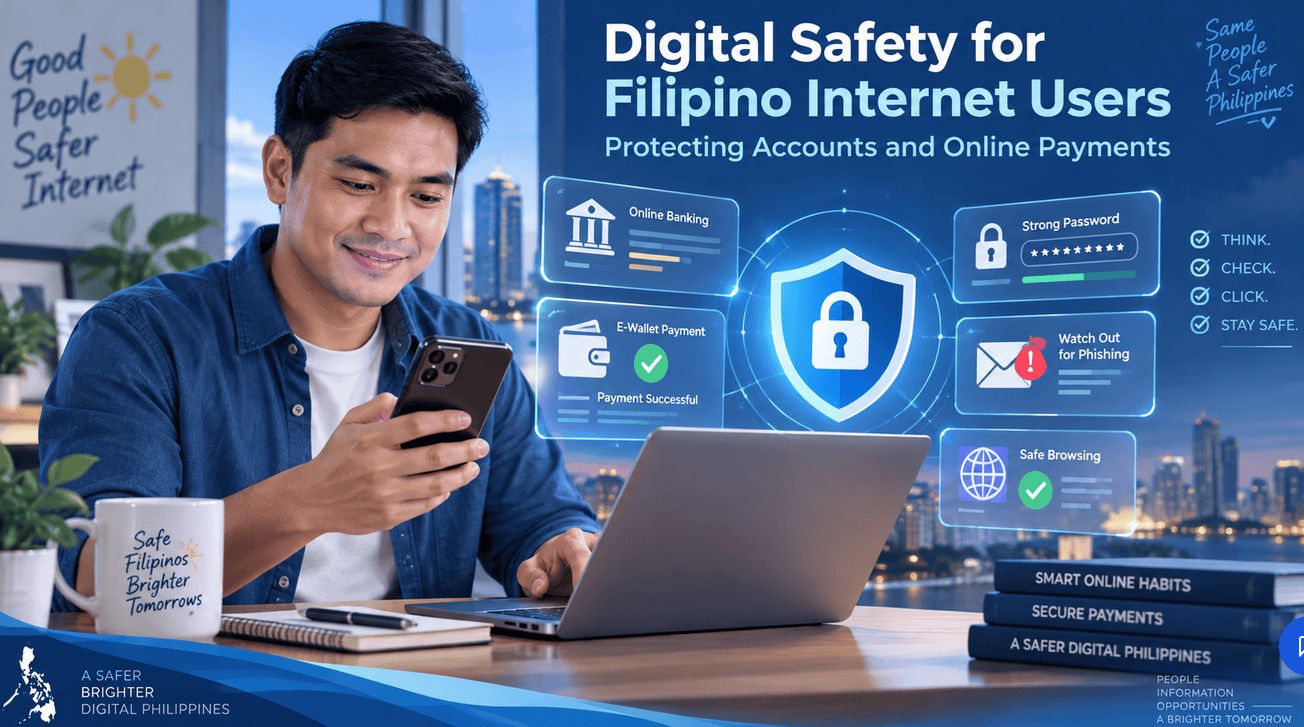
The internet has become an important part of everyday life in the Philippines. From sending money through digital wallets to shopping online and accessing entertainment, Filipinos increasingly rely on digital platforms for convenient services.
However, this convenience also creates opportunities for cybercriminals to target personal information and financial accounts.
Understanding online safety in the Philippines is essential for anyone who uses banking applications, e-wallets, social media, or online entertainment websites.
Fortunately, protecting your digital identity does not require advanced technical knowledge. Simple security habits can significantly reduce common risks.
Here are practical ways Filipino internet users can protect their accounts and online payments.
Why Online Safety Matters in the Philippines
The Growing Importance of Digital Accounts
Many Filipinos use online accounts for financial transactions, work, communication, and entertainment.
Services such as GCash, Maya, and online banking applications make transferring money and paying bills more convenient.
Unfortunately, attackers may attempt to steal passwords, impersonate legitimate companies, or trick users into authorizing fraudulent transactions.
A compromised account can expose private information and potentially result in financial losses.
That is why security awareness should become part of everyday internet use.
Understanding Common Online Threats
Cybercriminals use different techniques to deceive internet users.
Phishing involves fraudulent messages or websites designed to collect sensitive information.
Smishing refers to phishing attempts delivered through text messages.
Other threats include fake customer support representatives, fraudulent online stores, malicious applications, and investment scams promising unrealistic returns.
Recognizing these techniques helps users identify suspicious situations before sharing information or sending money.
Create Strong Passwords for Every Account
Avoid Reusing the Same Password
Using one password across multiple websites creates unnecessary risk.
If one service experiences a data breach, criminals may attempt to use the exposed credentials to access other accounts.
Create unique passwords for important services, especially banking applications, email accounts, and digital wallets.
A password manager can help generate and securely store complex passwords.
Avoid including easily guessed information such as birthdays, phone numbers, or familiar names.
Enable Two-Factor Authentication
Two-factor authentication adds another security requirement during login.
Depending on the service, this may involve an authenticator application, passkey, security key, or one-time password.
Even when someone obtains your password, an additional authentication requirement can make unauthorized access more difficult.
However, authentication codes can still be stolen through phishing or social engineering.
Never share your one-time password, even with someone claiming to represent customer support.
Protect Your GCash, Maya, and Online Banking Transactions
Verify Payment Details Before Sending Money
Digital wallets provide convenient payment options, but transactions require careful attention.
Before transferring money, confirm the recipient’s name, account number, and payment amount.
Be particularly cautious when someone asks you to transfer funds urgently or claims that immediate payment is necessary to avoid account suspension.
Scammers often create a false sense of urgency to prevent victims from checking information.
When uncertain, contact the financial institution through its official application or independently verified support channels.
Avoid Suspicious Payment Links
Fraudulent messages may contain links that resemble legitimate banking websites.
These pages can be designed to steal account credentials or payment information.
Instead of clicking links from unexpected messages, open your financial application directly or enter the verified website address yourself.
Remember that HTTPS alone does not prove a website is trustworthy. Fraudulent websites can also use encrypted connections.
Always verify the actual domain name and the identity of the organization requesting payment.
Stay Safe When Using Online Entertainment Platforms
Check Websites Before Creating Accounts
Online entertainment websites may request personal information, registration details, or payment credentials.
Before using any unfamiliar platform, review its privacy policy, account requirements, customer support information, and applicable terms.
For instance, Filipino users researching casino-related entertainment may encounter websites such as pinoy365, which publishes information about online casino games and account access.
Such information should not replace independent verification of a gambling operator’s licensing, payment arrangements, security measures, or withdrawal conditions.
Adults considering real-money gaming should also understand that gambling carries financial risks and cannot provide guaranteed earnings.
Never use money intended for rent, food, education, or other essential expenses.
Be Careful With Application Downloads
Some websites encourage users to download applications from outside official app stores.
Applications from unfamiliar sources may contain harmful software or request unnecessary permissions.
Before installing any application, verify its publisher, examine its requested permissions, and consider whether the download source is trustworthy.
Avoid disabling your phone’s security protections simply to install an unfamiliar application.
Keeping your operating system and applications updated can also help protect against known vulnerabilities.
Recognize Phishing and Fake Customer Support
Warning Signs of Suspicious Messages
Scam messages may claim that your account has been suspended, that you have won an unexpected prize, or that you must immediately verify your identity.
Some criminals impersonate banks, e-wallet providers, delivery companies, and online service representatives.
Be cautious when a message requests your password, PIN, authentication code, or payment information.
Do not assume a message is genuine simply because it displays a familiar company name or logo.
Verify the request using independently established contact details.
Never Share Sensitive Verification Codes
One-time passwords and account recovery codes are designed to help confirm access to your account.
Sharing these codes may allow criminals to complete unauthorized transactions or take control of your profile.
Legitimate customer support processes should not require you to disclose your confidential password or authentication codes to an individual representative.
If you accidentally share sensitive information, immediately secure your account and contact the relevant provider.
What Should You Do If You Become a Scam Victim?
Acting quickly may help limit additional damage.
If you suspect that an account has been compromised, change its password using a trusted device and terminate unfamiliar login sessions where possible.
Contact your bank or e-wallet provider immediately to report suspicious transactions and request appropriate account protection.
Preserve screenshots, transaction reference numbers, messages, and other relevant evidence.
You can also report cybercrime through the appropriate Philippine authorities.
The Bangko Sentral ng Pilipinas encourages financial consumers to follow a simple principle: check suspicious information, protect personal details, and report fraudulent activity.
Keep in mind that reporting quickly does not guarantee that lost funds will be recovered.
Final Thoughts
Digital services offer Filipino internet users greater convenience, but online safety should always remain a priority.
Strong passwords, additional authentication, careful payment verification, and awareness of phishing can reduce many common cybersecurity risks.
Whether you are using online banking, shopping platforms, or entertainment websites, take time to verify information before sharing personal details or completing transactions.
Developing responsible digital habits is one of the most practical ways to protect your privacy, financial information, and peace of mind in an increasingly connected Philippines.


